

Identifying British Trees by Their Leaves and Bark
Reading the Woods: Why Identification Matters
Walk into any British wood in late spring and you are surrounded by a conversation you have not yet learned to hear. Every tree tells you its name in a handful of quiet details — the cut of a leaf, the set of a bud, the fault lines in its bark. Learning those details turns a pleasant stroll into something closer to friendship, and it opens the door to everything that follows: noticing when the oak pushes its first leaves, filling a journal page with a hazel twig in January, or choosing the right timber for a hurdle or a spoon handle.
Folklore understood this long before field guides did. The oak was the tree of thunder and kingship, the ash a healer and a hinge between worlds, the hawthorn a tree you greeted politely and never cut without cause. None of that reverence makes sense unless you can tell one from another. So start with the four things every tree offers you: leaf, bud, twig and bark.
Start with the Leaves: Shape, Edge and Arrangement
Leaf shape is the beginner's shortcut, but arrangement is the surest clue. Look at how the leaves attach to the twig. Most of our natives carry them alternately, spiralling up the stem one at a time. A few carry them in opposite pairs, and that immediately narrows the field: ash, elder, field maple, horse chestnut and sycamore are the common opposite-leaved trees you will meet.
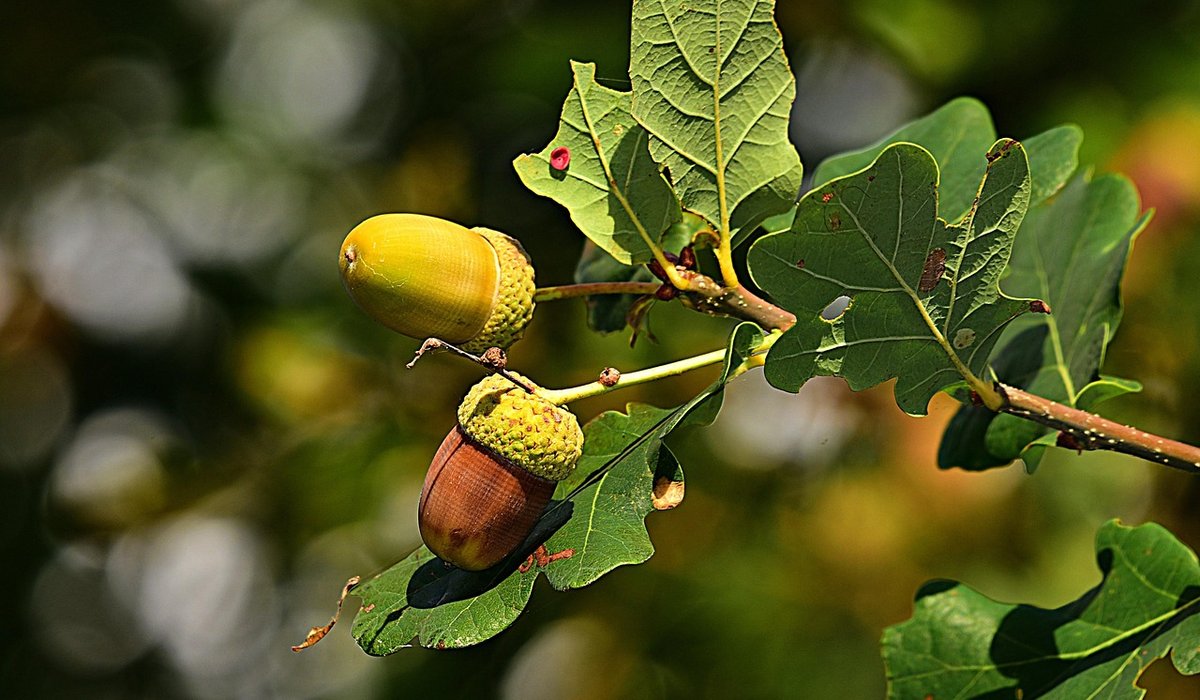
Then look at the outline. Our native oak leaves are lobed and wavy, with four to six rounded lobes on each side and no sharp points. Sessile oak leaves have almost no stalk and a long, wedge-shaped base; pedunculate oak leaves have a short stalk and lobed ears at the base. Hazel leaves are round, abruptly pointed and double-toothed, feeling soft and slightly downy when young. Hawthorn leaves are small, deeply cut into three or four lobes, glossy on top, with a wedge-shaped base like a tiny spade. Ash leaves are pinnate — seven to thirteen leaflets on a single stem, always ending in a terminal leaflet, with the pairs sitting opposite one another.
Size and hairiness matter too, but check the leaf you have in your hand against the tree it came from, not against a photograph. A single leaf tells you less than a branch does.
Buds, Twigs and the Winter Clues
When the canopy is bare, buds become the whole story. Ash is the easiest native tree to name in winter by bud alone: its buds are a sooty, velvety black, set in opposite pairs on olive-grey twigs. Nothing else common is quite so dark. Oak buds cluster in a huddle of scaly brown at the twig tip, often with several small ones below. Hazel buds are oval, greenish-brown and alternate, and by January the long yellow catkins are already hanging like lambs' tails.
Hawthorn twigs are slender, purple-brown and tipped with a thorn, with small reddish-brown buds set along them. Beech buds are long, slender and sharply pointed, wrapped in coppery scales like tiny cigars. Once you can read buds and leaf scars, you can identify most of a winter wood without a single leaf — a skill that makes January feel generous rather than bleak.
Bark: Texture, Colour and the Story Beneath
Bark changes with age, so use it to confirm rather than to begin. Young ash bark is smooth and pale grey; on mature trees it breaks into a distinctive pattern of narrow ridges running diamond-wise. Oak bark on a veteran tree is deeply fissured, rough as a dry-stone wall, often furred with moss, and it frequently hosts the soft green of a lichen or two.
Hazel bark is one of the loveliest in the wood: smooth, shiny and coppery-brown, with pale horizontal lenticels and a habit of peeling away in thin strips. Hawthorn bark is grey-brown and broken into shallow, twisting fissures, and old thorn trees have a knotted, muscular look. Where you find smooth grey bark with faint horizontal bands, and a canopy of pale green leaves held close to the trunk, you may be looking at beech. Birch, of course, gives itself away with white, papery bark and black diamond-shaped lenticels.
Four Woodland Favourites to Know Well
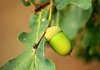
- Oak: lobed leaves, clustered scaly buds, deeply ridged bark, acorns in autumn. Look for galls, holes and the sheer girth of old trees — a veteran oak supports more life than any other native.
- Ash: opposite pinnate leaves, black velvety buds, smooth grey young bark, bunches of winged keys in winter. Note that ash shows leaf burst late; a bare crown in May is normal.
- Hazel: round double-toothed leaves, alternate buds, coppery peeling bark, catkins from midwinter and nuts in September. Often multi-stemmed from old coppice stools.
- Hawthorn: small three-lobed leaves, thorny purple-brown twigs, grey fissured bark, white May blossom and red haws. Frequently the only tree in a hedge.
Keeping a Nature Journal
A journal rewards slowness. Note the date and the place, then record the arrangement of leaves on the twig, the colour and texture of the bud, and one line about the bark. Add a quick pencil sketch — a leaf outline, a bud in profile, a twig with its leaf scars. Press a leaf or two between the pages, or touch in a watercolour wash once you are home.
Come back to the same tree each month. Write down when the buds swell, when the leaves unfurl, when the catkins open, when the keys and acorns fall. Within a year you will have a personal record more useful than any guide, because it is tied to your own patch of woodland and its particular weather.
Crafting from the Woodland
Identification and craft go hand in hand: you cannot sensibly work a wood you cannot name. Hazel coppice regrows from the stump, which is why it has been cut on a rotation for centuries to make hurdles, beanpoles, walking sticks and woven panels. Its straight, pliable rods split and bend beautifully. Ash takes a polished finish and has the spring and strength for tool handles, besoms and chair legs, though you should find it already fallen or take it with the landowner's permission. Oak gives pegs, mallets and durable pegs and frames. Hawthorn, dense and hard, suits small carvings and engraved details.
Work with windfall and storm-thrown branches where you can, and never strip bark from a living tree. Leave the deadwood standing and the veteran trees alone. Take only what the wood can spare, and the wood will keep offering it back to you, season after season.


Tree Lore
-
Choose level paths, short loops and plenty of benches so children, older relatives and reluctant walkers can enjoy the trees together.
Nature Journaling


-

Long established fact that a reader will be distracted
-

Long established fact that a reader will be distracted
-

Long established fact that a reader will be distracted

Woodland Walks
Karla Gleichauf
12 May 2017 at 05:28 pm
On the other hand, we denounce with righteous indignation and dislike men who are so beguiled and demoralized by the charms of pleasure of the moment
M Shyamalan
12 May 2017 at 05:28 pm
On the other hand, we denounce with righteous indignation and dislike men who are so beguiled and demoralized by the charms of pleasure of the moment
Liz Montano
12 May 2017 at 05:28 pm
On the other hand, we denounce with righteous indignation and dislike men who are so beguiled and demoralized by the charms of pleasure of the moment